Winter outdoor play that actually works.
Cold weather is not the reason your kids are inside. Lack of routine is. Here is what Scandinavian families do that the rest of us could copy.
April 10, 2026
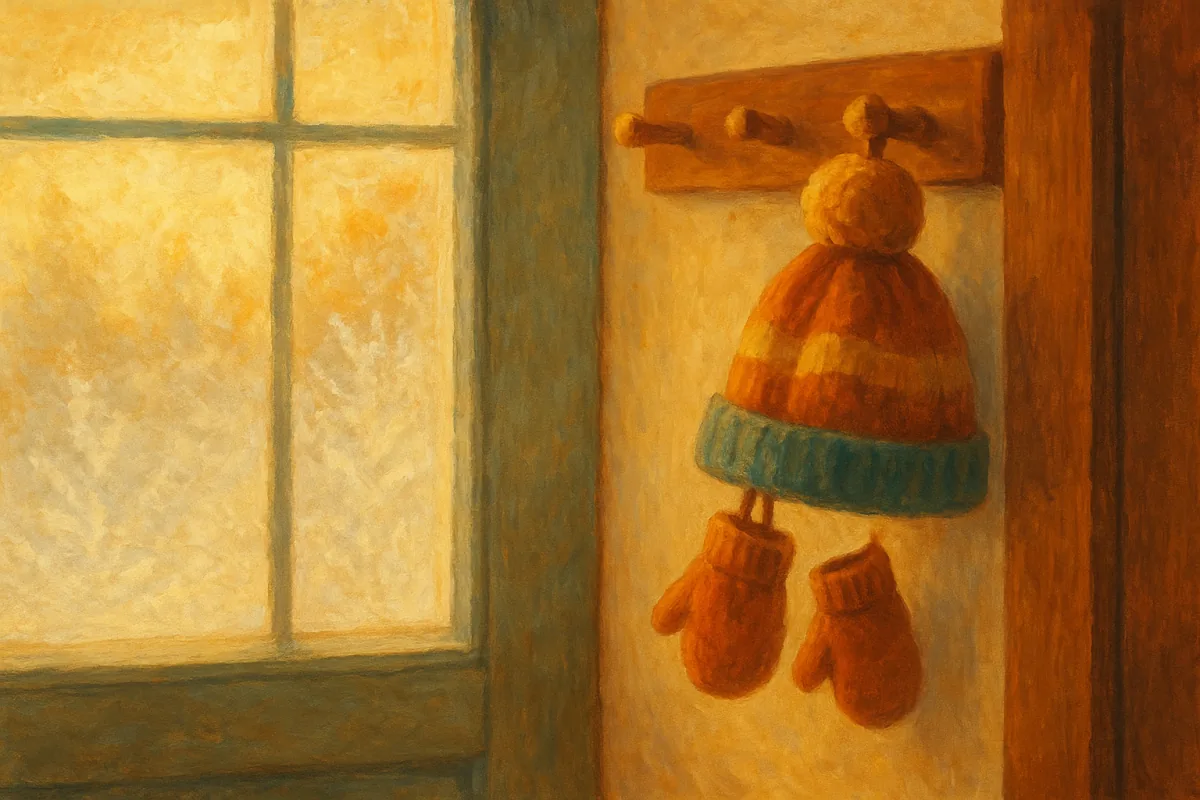
There is a Norwegian saying every Outzy parent should have on a fridge magnet: Det finnes ikke dårlig vær, bare dårlige klær. "There is no bad weather, only bad clothing."
The Scandinavian approach to winter outdoor play, which produces some of the highest outdoor-time-per-week numbers in any rich country, runs on three pillars.
1. Routine, not motivation
The Norwegian barnehage (preschool) standard is that children spend a substantial part of every day outdoors, including winter, regardless of weather short of dangerous storms or temperatures below about -10 °C. The decision is not "do we go out today?" — that question is never asked. The decision is "what do we wear?"
Translated for a non-Scandinavian household: pick a daily slot (after-school works), and remove the weather question entirely. Out you go.
2. The right base layer
The single biggest difference between a kid who is happy outside in 2 °C and a kid who is miserable is wool. A merino base layer (top and bottom) costs €30-60 and lasts about three years. It is the difference between "let's go in, I'm cold" at minute 12 and "five more minutes!" at minute 50.
Above the wool: a fleece, a windproof outer, a hat, mittens (mittens beat gloves under 4 °C; warmer fingers per €), and waterproof boots. That's it. The Scandinavian rule of thumb is that the right outfit costs less than a single takeaway dinner and lasts a season.
3. A short list of cold-weather games
This is where our indoor kit has a winter sibling. The catalogue we've seen work:
- Find-the-warmest-spot. A walk where the kid has to find the warmest patch of pavement (south-facing, sheltered). Surprisingly engaging.
- Snow fort, when there is snow. A whole afternoon's project. The structure of the afternoon is half the battle.
- Bonfire-night style stick gathering. Even without a fire, the activity of gathering a pile of sticks is captivating. Most parents under-estimate this.
- Ice puddle science. Tap the ice, weigh it, draw on it with chalk before it melts.
What the research says
A 2017 study in Frontiers in Public Health (Ulset et al.) followed 562 children in Norwegian outdoor preschools and found significantly fewer attention-deficit symptoms compared to children in conventional indoor-dominant settings, after adjusting for SES. The effect was strongest in winter months, when the contrast between settings was largest.
The mechanism is the same one we discuss in our nature-deficit piece: outdoor exposure restores directed attention. The temperature is incidental.
What to do this week
- Check your child has a wool base layer that fits.
- Pick one daily slot to go outside, regardless of weather, for the next two weeks.
- Don't ask if they want to go. Ask what they want to wear.
By week two, the fight is gone and the routine is in.
Sources
- Ulset, V. et al. "Time spent outdoors during preschool: links with children's cognitive and behavioral development." *Journal of Environmental Psychology* 52, 2017.
- Borge, A.I.H., Nordhagen, R. "Childhood outdoor activity in Norwegian preschools and child wellbeing." *Frontiers in Public Health* 5, 2017.
Read next
The streetlights rule, and why it actually worked.
A generation of children grew up with one bedtime cue and very little supervision. The science of wh...
A small yard still counts.
You don't need a wilderness, you need a defined patch of outside the kid is allowed to use without a...
What the Netherlands gets right about outdoor childhood.
A few specific Dutch practices that produce one of Europe's highest outdoor-childhood rates. Most ar...